



Published on: September 25, 2026
Wondering how long a dental implant will actually hold up before it needs attention? It’s one of the first questions Cape Coral, FL patients ask before moving forward with treatment, and the answer depends on more than the implant itself. Dental implants can last decades, sometimes a lifetime, but the outcome depends on daily habits, bone health, and follow-up care. At Modern Dental Cape Coral, Dr. Gregory A. Pette walks every patient through what realistically affects implant lifespan. Here’s what determines how long your implant will last and how to protect that investment.
What Is the Average Lifespan of a Dental Implant?
The titanium implant post typically lasts 20 to 30 years, and many patients keep the same post for life. The crown attached to it usually needs replacement every 10 to 15 years due to normal wear. Long-term studies show implant dentistry success rates above 90 percent after a decade of use.
What Determines How Long an Implant Will Last?
Lifespan varies by patient because several factors interact at once. Understanding each one helps you know what’s within your control.
Oral Hygiene Habits
Plaque buildup around an implant behaves the same way it does around a natural tooth. Left uncleaned, it leads to gum inflammation and eventually bone loss around the implant. Daily brushing and flossing remain the single biggest factor in long-term success.
Bone Density and Jaw Health
Titanium implants bond to bone through osseointegration, a process that requires enough bone volume to create a stable anchor. Patients with significant bone loss before treatment may need grafting first to give the implant a lasting foundation.
Bite Force and Teeth Grinding
An implant absorbs chewing pressure differently than a natural tooth. Repeated grinding or an uneven bite can loosen the crown or stress the abutment screw over years of use, even when the implant itself stays healthy.
Smoking and Circulation
Nicotine reduces blood flow to gum tissue, which slows healing and weakens the bond between bone and implant. Smokers face a higher rate of early implant complications than non-smokers.
Precision of the Original Placement
Correct angle, depth, and spacing during placement affect how evenly forces distribute across the implant for years afterward. This is one reason surgical planning and imaging matter as much as the material used.
Implant Post vs. Crown: Different Parts, Different Lifespans
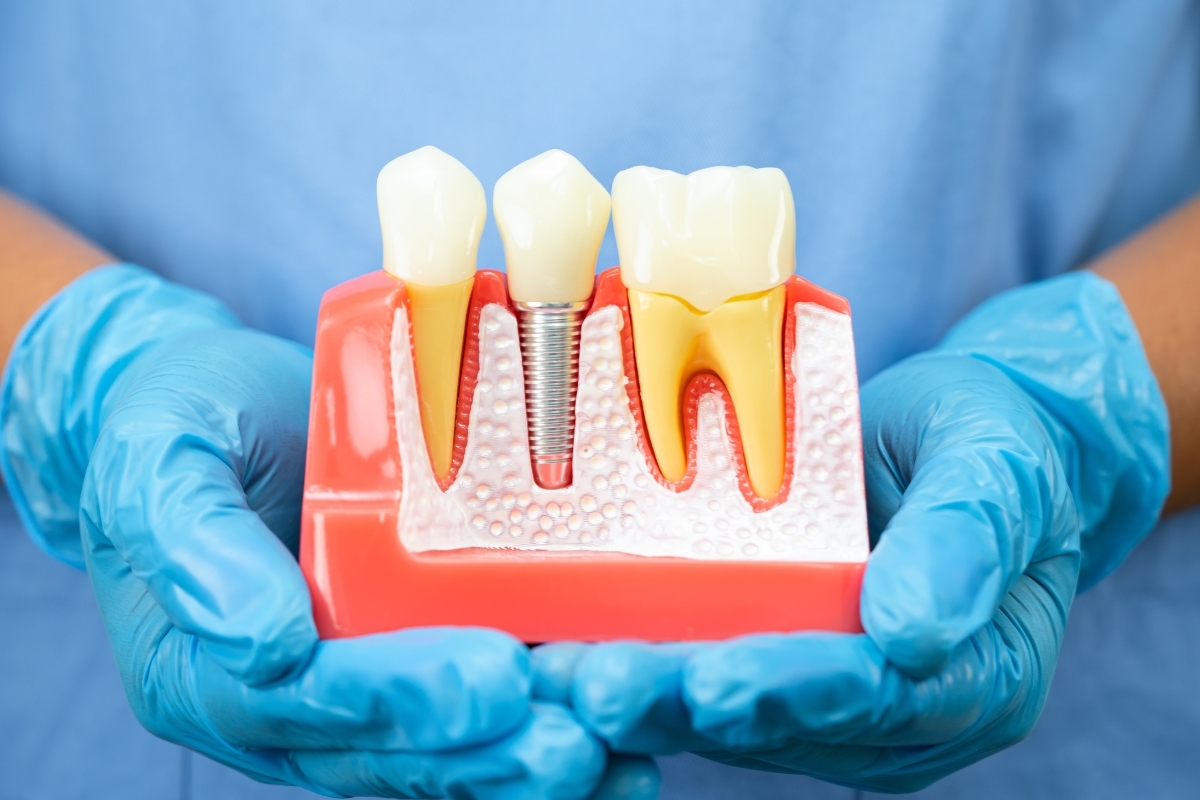
An implant has three components, and each one wears at a different rate.
| Component | Typical Lifespan | What Affects It |
| Titanium post | 20-30 years, often lifetime | Bone density, hygiene, smoking |
| Abutment | 15-25 years | Bite force, screw tightness |
| Crown | 10-15 years | Material, grinding, daily wear |
Knowing this helps set realistic expectations. A crown replacement after a decade doesn’t mean the implant failed. It means the visible tooth did what it was designed to do.
How Long Do All-on-4 Implants Last Compared to Single Implants?
All-on-4 implants follow similar biology to single-tooth implants, since both rely on osseointegration. The four-implant design distributes bite force across the entire arch rather than one tooth, which can reduce strain on any single implant. Success rates for All-on-4 restorations are comparable to single implants over a 10-year period when maintenance is consistent.
Daily Habits That Extend Implant Life
Small, consistent habits matter more than any single treatment decision.
- Brush twice daily and clean around the implant with floss or an interdental brush.
- Schedule professional cleanings every six months, or as your dentist recommends.
- Wear a nightguard if you grind your teeth.
- Avoid using implants to open packaging or bite unusually hard objects.
- Manage diabetes or other health conditions with your physician’s guidance.
- Avoid smoking, especially in the months following placement.
How Often Should You See the Dentist After Getting Implants?
Most patients return every six months for a standard cleaning and exam, similar to natural teeth. Dentists check bone levels around the implant periodically using X-rays, since bone loss can occur without obvious symptoms. Patients with a history of gum disease may need more frequent visits.
Signs Your Implant Needs Attention
Catching a problem early almost always means a simpler fix. Contact your dentist if you notice:
- Gum swelling, redness, or bleeding near the implant
- Looseness in the crown or a shifting feeling
- Discomfort while chewing that doesn’t resolve
- Persistent bad breath around one specific tooth
Does Cape Coral’s Lifestyle Affect Implant Longevity?
Local habits play a bigger role than many patients expect. Cape Coral’s boating, fishing, and pickleball culture means facial impact injuries happen more often here than in less active communities. Seasonal residents who split time between Cape Coral and northern states should keep one consistent dental provider, since gaps in six-month checkups make early bone loss harder to catch. Patients across Pine Island, North Fort Myers, and greater Lee County face the same considerations, which is why routine visits matter even when an implant feels completely normal.
Is an Implant Still Worth It If the Crown Needs Replacing Later?
Yes. A crown replacement after 10 to 15 years is routine maintenance, not a failure of the implant. The titanium post, which represents the more complex part of treatment, is designed to remain in place far longer. Viewed over a full lifetime, the cost per year of an implant is often lower than repeatedly replacing a bridge or relining a denture.
What Happens If an Implant Is Neglected?
Skipping cleanings or ignoring early symptoms allows plaque to spread below the gumline, where it’s harder to reach. Over months or years, this can develop into peri-implantitis, a condition that mirrors gum disease and slowly breaks down the supporting bone. This is why the six-month visit matters even when nothing feels wrong.
Protecting Your Investment in Cape Coral
An implant’s lifespan comes down to a partnership between daily care and professional monitoring. At Modern Dental Cape Coral, Dr. Pette and the team evaluate bone health, bite alignment, and cleaning technique at every visit to help implants last as long as biologically possible. If you’re considering implants or want a checkup on ones you already have, schedule a visit with Modern Dental Cape Coral for a clear look at where things stand.
Frequently Asked Questions
Can a dental implant fail after 10 years of working fine?
Yes, though it’s less common than early failure. Peri-implantitis can develop gradually even after years of normal function, especially if hygiene habits slip or a health condition changes. Regular imaging catches bone loss before symptoms appear, so scheduling a checkup is the best way to confirm an implant is still stable.
Does the crown wearing out mean the implant needs to be replaced too?
No. The crown and the implant post are separate components with different lifespans. A worn crown can usually be replaced while the titanium post stays in place, provided the bone around it remains healthy. A dental exam can confirm which part actually needs attention.
Do implants need special toothpaste or tools to last longer?
Not typically, though gentle, non-abrasive toothpaste and interdental brushes designed for implants can help clean tight spaces around the crown. Standard hygiene tools work well for most patients. A dental team can recommend specific tools based on your restoration type.
Is bone loss around an implant reversible?
Early-stage bone loss from peri-implantitis can sometimes be stabilized with deep cleaning and improved hygiene, but advanced bone loss is harder to reverse. Catching it early through routine imaging makes a real difference in outcome. An in-person evaluation is the only way to know how much bone remains.
How do I know if my old implant is still healthy?
Comfort alone isn’t a reliable indicator, since bone loss can progress without pain. Digital X-rays and a bite evaluation give a clear picture of whether the implant is still stable. Scheduling a checkup is worthwhile even if nothing feels wrong.
 Full New Patient Dental Exam and X-rays: ONLY $59!