



Published on: July 20, 2026
Picture this: you’re laughing at dinner, and you suddenly catch yourself covering your mouth out of habit. Or maybe you’ve noticed that biting into an apple or sandwich just doesn’t feel quite right. If your front teeth don’t touch when your back teeth are closed, you might be dealing with what dentists call an open bite and you’re probably wondering if there’s a comfortable, low-hassle way to fix it.
Here’s the good news: Invisalign for open bite correction is not only possible, it’s become one of the most popular options for adults and teens who want straighter teeth without a mouth full of metal. Let’s talk through how it works, what to expect, and whether it might be the right fit for you.
What Exactly Is an Open Bite?
An open bite happens when the upper and lower front teeth don’t meet when you bite down. Instead, there’s a visible gap, even when your jaw is fully closed. It can affect just the front teeth (anterior open bite) or, less commonly, the back teeth (posterior open bite).
Common causes include:
- Prolonged thumb-sucking or pacifier use in childhood
- Tongue thrusting (pushing the tongue against the front teeth when swallowing)
- Jaw growth patterns or genetics
- Long-term mouth breathing
Beyond the cosmetic concern, an open bite can make it harder to bite into food properly, affect speech clarity, and sometimes contribute to jaw discomfort over time.
So, How Does Invisalign Correct an Open Bite?
This is the question most people ask first, and it’s a fair one. Traditional metal braces have long been the go-to for bite corrections, so it’s natural to wonder if clear aligners can really do the same job.
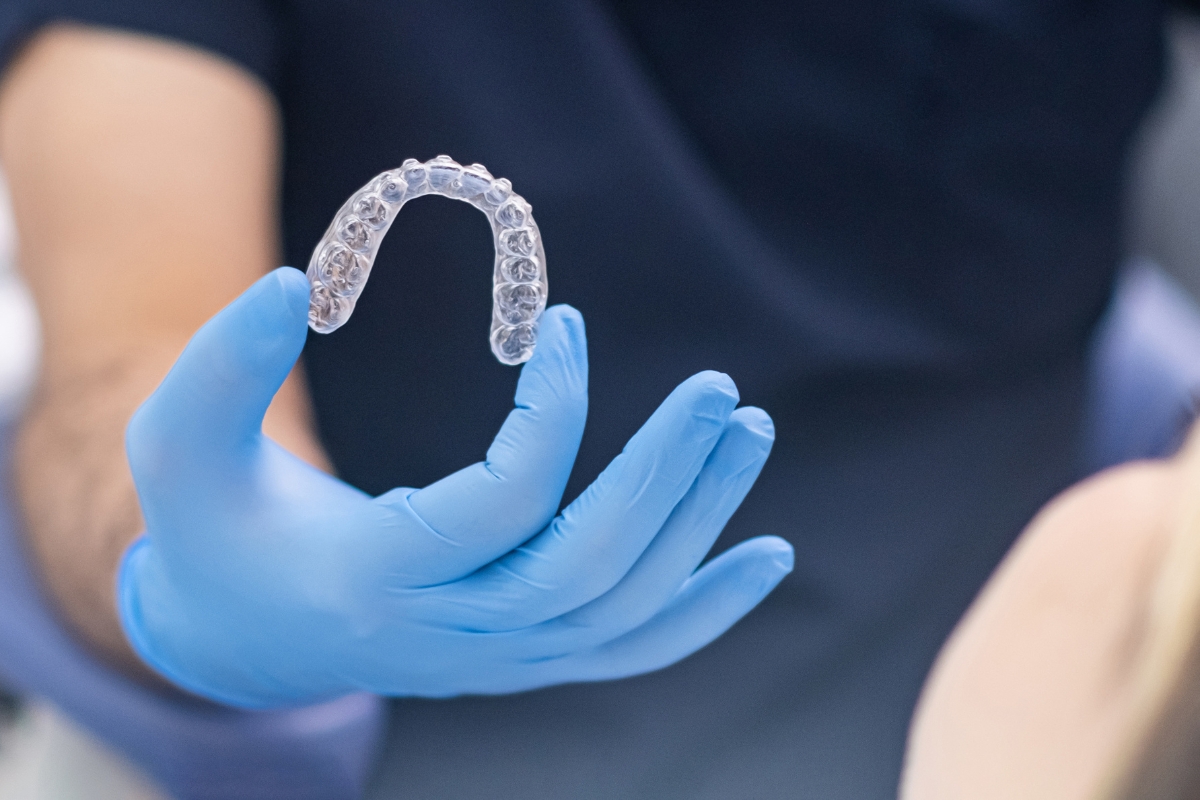
Here’s how does Invisalign correct an open bite in practice: the aligners use a series of custom-fitted, removable trays that gradually shift your teeth into proper alignment. For open bites specifically, Invisalign often incorporates small tooth-colored attachments (sometimes called buttons) and precision bite ramps built into the aligners. These features apply gentle, targeted pressure that encourages the front teeth to extrude, or move downward, until they meet properly with the lower teeth.
Each set of aligners is worn for about one to two weeks before moving to the next in the series, slowly and predictably guiding your bite into a healthier position.
Is Invisalign Right for Every Open Bite Case?
Here’s where honesty matters most. Not every open bite is created equal, and Invisalign isn’t a one-size-fits-all answer.
Invisalign tends to work well for:
- Mild to moderate anterior open bites
- Cases caused primarily by tooth position rather than jaw structure
- Patients who are committed to wearing aligners 20-22 hours a day
More severe, skeletal open bites — where the jawbone itself is the underlying issue — may need a combination approach, sometimes involving orthodontic treatment alongside jaw growth management or, in rare cases, surgical evaluation. This is exactly why a proper consultation and digital scan matter so much before starting treatment. A dentist experienced in Invisalign can evaluate your specific bite pattern and let you know realistically what results to expect.
What Does the Open Bite Correction Process Look Like?
If you’re considering treatment, here’s a simple breakdown of what typically happens:
- Initial consultation and digital scan – Your dentist takes 3D images of your teeth and bite to map out a treatment plan.
- Custom treatment plan – You’ll see a simulated preview of how your smile is expected to change.
- Receiving your aligners – You’ll get a series of trays to wear in sequence, changing them roughly every one to two weeks.
- Regular check-ins – Periodic visits help track progress and make sure your bite is closing as planned.
- Retention phase – Once your teeth reach their new position, a retainer helps keep everything in place.
Most open bite cases take anywhere from several months to around a year and a half, depending on severity. Your dentist will give you a personalized timeline after your evaluation.
Benefits of Choosing Invisalign for Bite Correction
Many patients lean toward clear aligners over traditional braces for a few practical reasons:
- Removable convenience – Take them out to eat, brush, and floss normally.
- Discreet appearance – Clear trays are far less noticeable than metal brackets and wires.
- Comfort – No sharp metal edges poking your cheeks or lips.
- Predictability – Digital planning shows you a preview of your results before you even start.
Of course, results depend on consistency. Aligners only work when they’re actually in your mouth, so discipline plays a real role in your outcome.
Signs You Might Benefit from Orthodontic Treatment
Not sure if your bite qualifies as a concern worth addressing? A few signs worth paying attention to:
- Visible gap between top and bottom front teeth when biting down
- Difficulty biting into foods like sandwiches or apples
- A lisp or whistling sound when speaking
- Chronic mouth breathing, especially noticed in childhood
If any of this sounds familiar, it’s worth having a conversation with a dental professional rather than guessing on your own.
Ready to Get Your Smile on Track?
An open bite doesn’t have to be something you just live with. With today’s technology, correcting it can be more comfortable and discreet than you might expect. If you’ve been noticing a gap when you bite down or you’re just curious whether Invisalign could work for you, the best next step is a simple conversation with a dentist who can look at your specific smile.
Reach out to Modern Dental Cape Coral to schedule a consultation and find out what your treatment options really look like. A healthier, more confident bite might be closer than you think.
Frequently Asked Questions
Can Invisalign completely fix an open bite?
Invisalign can fully correct many mild to moderate open bites, especially those caused by tooth position. Severe skeletal cases may need additional treatment alongside aligners.
How long does it take to fix an open bite with Invisalign?
Treatment time varies, but most open bite cases take between 6 and 18 months. Your dentist will estimate a timeline based on your specific bite.
Is Invisalign as effective as braces for open bites?
For many mild to moderate cases, Invisalign works just as effectively as traditional braces. Success ultimately depends on consistent wear and the complexity of the bite.
Does insurance cover Invisalign for open bite correction?
Many dental insurance plans that cover orthodontic treatment also cover Invisalign, though coverage varies by provider. It’s best to check directly with your insurance and dental office.
What happens if an open bite is left untreated?
Untreated open bites can lead to speech issues, uneven tooth wear, and chewing difficulties over time. Addressing it early often makes correction simpler and faster.
 Full New Patient Dental Exam and X-rays: ONLY $59!